In modern industrial piping systems, selecting the right material solution is critical for performance, safety, and long-term cost efficiency. Among the most widely used options are clad pipes and lined pipes, which are often compared due to their corrosion resistance capabilities. However, they differ significantly in structure, manufacturing methods, and overall performance.
This article compares clad pipes (metallurgically bonded) with lined pipes (mechanically fitted), focusing on their structural differences, performance characteristics, and key selection criteria. It is intended for engineers and decision-makers working in subsea pipelines, chemical processing plants, and high-temperature heat exchanger systems, where material integrity and corrosion resistance are essential.
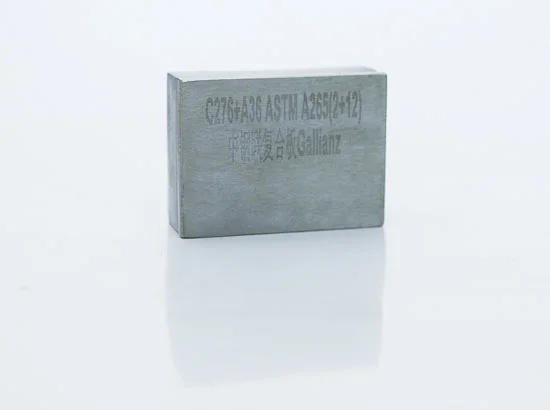
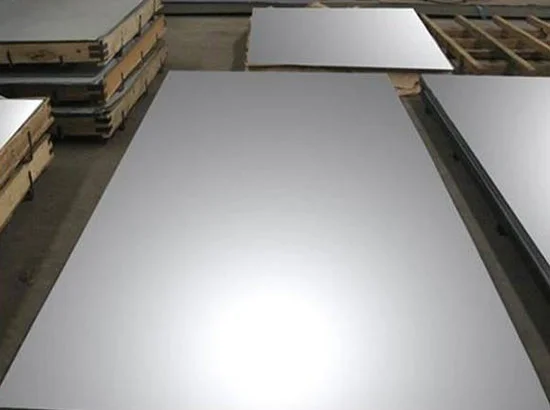
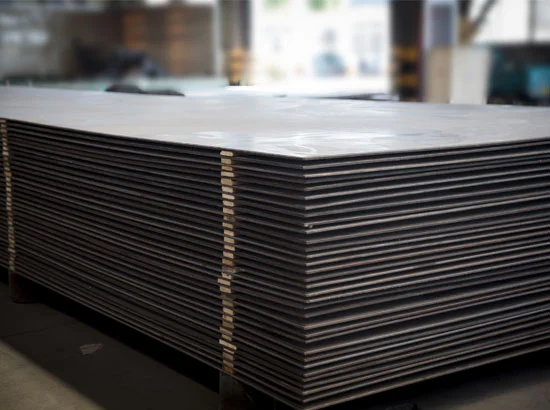
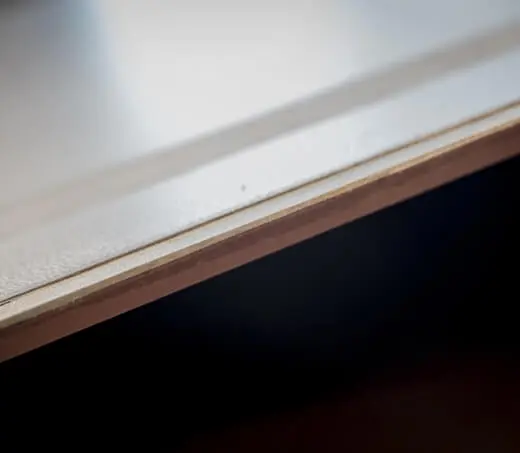
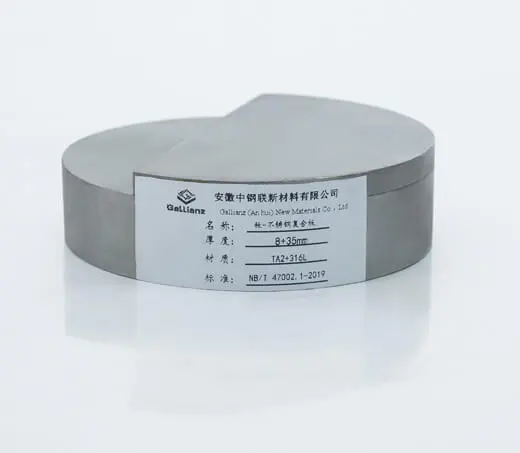
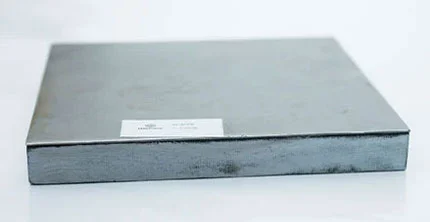
Clad pipes are composite pipes that combine a high-strength carbon steel base (providing structural integrity and pressure resistance) with a corrosion-resistant alloy (CRA) layer metallurgically bonded to the inner surface.
Unlike coatings or mechanical liners, the cladding layer is fully metallurgically integrated with the base material, forming a permanent bond that ensures superior adhesion, long-term stability, and resistance to delamination under harsh operating conditions.
From an engineering perspective, the clad layer typically has a thickness ranging from 1.5 mm to 4.0 mm, depending on service environment and design requirements. The bond strength is typically verified by shear or peel testing in accordance with ASTM A263/ ASTM A264, with project-specific requirements often exceeding 210 MPa depending on service conditions.
In some engineering contexts, especially in instrumentation systems and compact heat exchanger applications, a smaller-diameter form of clad pipe is referred to as a clad tube. It follows the same metallurgical bonding principle as clad pipes but is designed for applications requiring tighter dimensional control, improved surface precision, and higher packing density in compact equipment.
In industries such as oil & gas, petrochemicals, and offshore engineering, clad pipe systems are widely used where a combination of mechanical strength and corrosion resistance is essential for safe and cost-effective long-term operation.
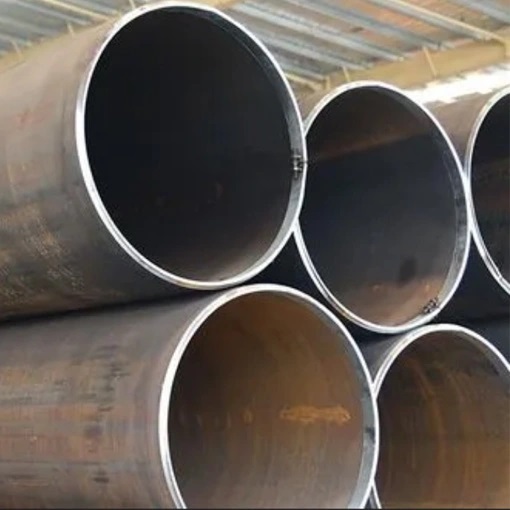
Clad pipes offer significant advantages, especially in harsh industrial environments:
The alloy layer protects against acids, seawater, hydrogen sulfide, and other aggressive media.
The carbon steel base ensures excellent pressure-bearing capability.Long Service Life
Reduced corrosion leads to significantly extended operational lifespan.
Although initial cost is higher, maintenance and replacement costs are much lower. Compared to solid alloy pipes, clad pipes reduce material cost by 40–60% while providing equivalent corrosion resistance.
Ideal for offshore platforms, subsea pipelines, and chemical processing plants.
Because of these advantages, many engineers prefer clad pipes over lined systems in high-risk environments.
Lined pipes are composite pipes where a corrosion-resistant material (such as PTFE, rubber, or plastic) is inserted inside a carbon steel pipe.
Unlike cladding, the liner is mechanically inserted and held by flange clamping or adhesive, not metallurgically bonded.
Common liner materials include:
PTFE (Teflon)
Rubber
Polyethylene (PE)
PVC
Lined pipes are widely used in low-to-medium pressure applications involving corrosive fluids. For example, PTFE liners are typically limited to 260°C and 2 MPa; rubber liners are restricted to even lower temperatures and pressures depending on the formulation.
Lined pipes are popular due to their cost-effectiveness and flexibility:
Suitable for many acids and solvents.
Cheaper than clad pipe systems.
Easier installation and handling.
In some systems, liners can be replaced without replacing the entire pipe. However, lined pipes generally have limitations in pressure, temperature, and mechanical strength compared to clad solutions. However, lined pipes are susceptible to liner collapse under vacuum or rapid temperature cycling, and liner replacement often requires full disassembly.
The key differences between these two systems are structural and performance-based.
| Feature | Clad Pipes | Lined Pipes |
|---|---|---|
| Bonding Type | Metallurgical bond | Mechanical / adhesive bond |
| Base Material | Carbon steel | Carbon steel |
| Inner Layer | Metallic alloy | Polymer or rubber(such as PTFE, PP, PE, rubber, etc.) |
| Pressure Capacity | High — typically up to 35+ MPa | Medium to low— typically < 2–4 MPa |
| Temperature Resistance | High— up to 600°C+ | Limited—typically < 260°C |
| Durability | Resistant to thermal cycling | Risk of liner buckling |
| Maintenance Needs | Low | Moderate to high |
| Cost | Higher initial | Lower initial |
| Best Use Case | Harsh environments (offshore, sour service) | Mild corrosive fluids (drainlines, chemical dosing) |
| Vacuum Resistance | Structurally stable under negative pressure, no liner collapse risk | Susceptible to liner collapse or inward deformation under vacuum conditions |
In summary, clad pipes are engineered for performance-critical applications, while lined pipes focus on cost-sensitive and less demanding systems.
Selecting between clad and lined pipes depends on key engineering and economic factors. The decision should consider operating conditions as well as long-term lifecycle performance.
Clad pipes are preferred for higher-pressure or vacuum conditions due to better structural integrity.
Typical guideline:
Pressure > 4 MPa (≈ 40 bar) → clad pipes are generally required
Vacuum service → clad pipes are preferred to avoid liner collapse or delamination
Lined pipes are typically suitable only for low to medium pressure systems.
Temperature limits are critical for lined piping systems, especially polymer-lined types.
Typical thresholds:
Above 260°C → organic linings (PTFE, PFA, FEP) are no longer suitable
In this range, use clad pipes or solid alloy materials
Clad pipes offer better performance under both high and low extreme temperatures.
Highly corrosive or erosive media often require more robust solutions.
Clad pipes are preferred for:
Strong acids, chlorides, and mixed-phase corrosive fluids
Erosion-corrosion or high-velocity service
Lined pipes are suitable for moderate corrosion conditions but are less durable in severe environments.
Cost is a key factor, but should be evaluated alongside service life.
Typical cost range:
Clad pipes cost about 1.5–3 more than carbon steel lined with PTFE initially
However, they may offer lower total lifecycle cost due to longer service life and reduced maintenance
Clad pipes often provide better long-term ROI in demanding applications such as high-pressure, high-temperature, or continuous chemical service.
Lined pipes are more economical for:
low-pressure transfer systems
moderate corrosion conditions
projects with strict upfront budget limits
A clad tube is commonly used in:
Heat exchangers
Power generation systems
Chemical reactors
High-precision fluid systems
Typical combinations include:
Carbon steel + stainless steel
Carbon steel + Inconel
Carbon steel + nickel alloys
These combinations balance strength and corrosion resistance.
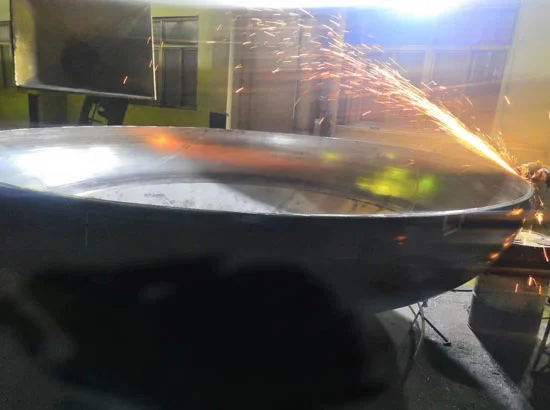
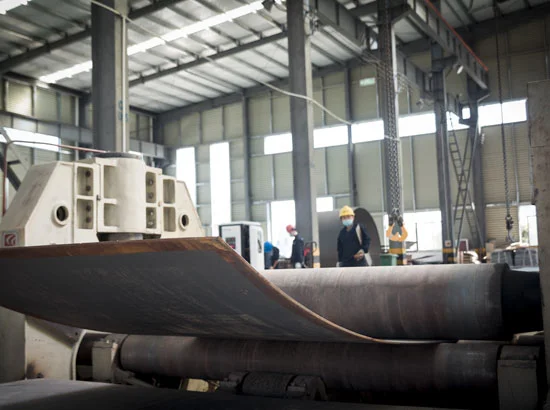
In terms of manufacturing methods during clad pipe manufacturing process, clad pipes are commonly produced using:
Explosive bonding (explosion cladding)
Hot rolling / co-extrusion cladding
Weld overlay / strip cladding (internal surfacing techniques)
Each method affects bond strength, uniformity, and suitability for different service environments.
Reputable clad pipe manufacturers perform ultrasonic testing (UT) of the bond interface, shear strength tests (e.g., ASTM A264), and hydrostatic pressure tests.
The choice between clad pipes and lined pipes should be based on a clear evaluation of operating conditions rather than cost alone.
Clad pipes are the preferred solution for demanding environments involving high pressure, high temperature, severe corrosion, vacuum service, or long-distance critical transport. Their metallurgically bonded structure provides excellent mechanical strength and long-term stability, making them suitable for offshore pipelines, high-pressure chemical systems, and energy infrastructure.
Lined pipes, on the other hand, are more appropriate for low to medium pressure applications where the operating temperature is moderate and the conveyed media are corrosive but not extreme. They offer a cost-effective solution for utilities, chemical dosing lines, and less mechanically demanding systems.
In summary, clad pipes should be selected when safety, durability, and lifecycle reliability are the primary priorities, while lined pipes are better suited for cost-sensitive applications with less severe operating conditions.
 English
 日本語
日本語 한국어
한국어 français
 Deutsch
 Español
 italiano
 русский
 português
 العربية
 فارسی
فارسی