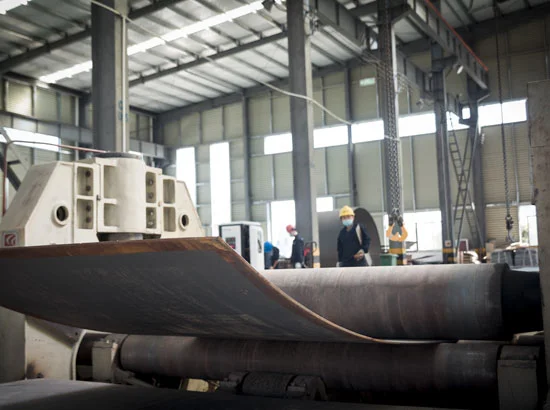
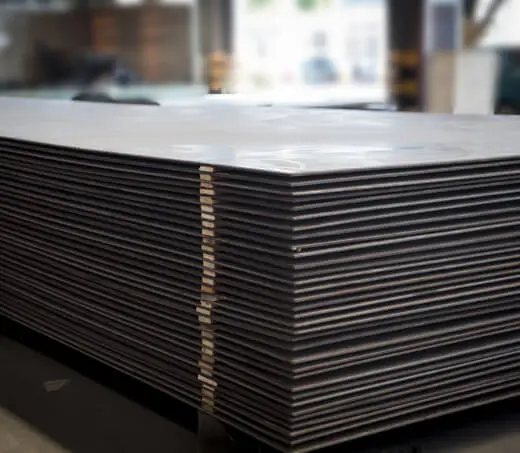
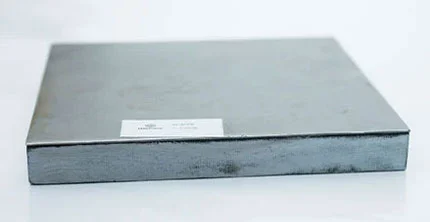
The primary effect of hot rolling on 310S stainless steel lies in improving the as-cast microstructure and refining grains through high-temperature plastic deformation and recrystallization. However, due to its high alloy content, 310S has a narrow hot-working window. Inadequate process control can readily lead to microstructural inhomogeneity, property fluctuations, and surface cracking.
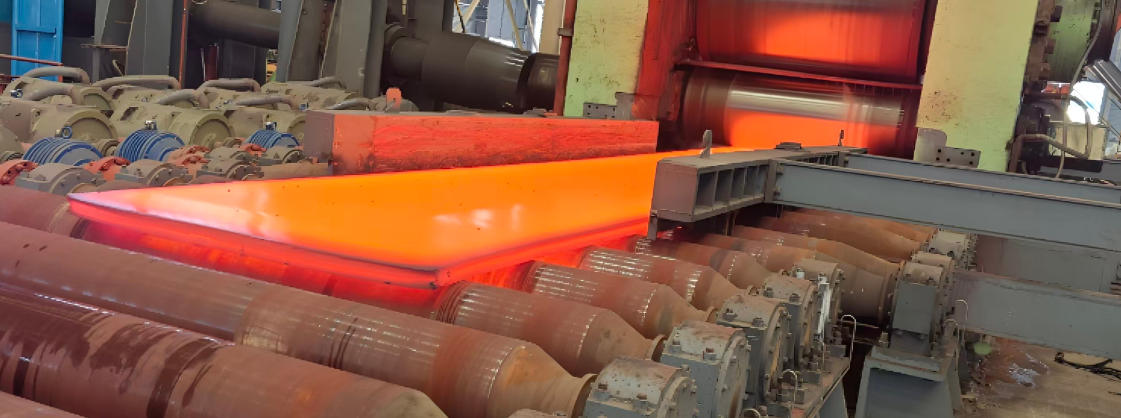
The influence of hot rolling process is mainly governed by the following key process parameters:
Influencing Factor | Core Mechanism and Effects | Key Process Control Points and Objectives |
Rolling temperature | Hot rolling is carried out at high temperatures (typically 1000–1250 °C) to reduce deformation resistance and enhance plasticity. Owing to the high alloying level of 310S, the dynamic recrystallization temperature is high and the kinetics are slow; rapid temperature drop can cause a sharp increase in deformation resistance. | Control entry and finish rolling temperatures: the entry temperature must be sufficiently high to ensure plasticity; if the finish rolling temperature is too low (e.g., below 950 °C), recrystallization may be incomplete, resulting in microstructural inhomogeneity. |
Reduction and pass schedule | The reduction per pass and the total accumulated deformation directly affect the driving force and completeness of recrystallization. Large total deformation promotes full recrystallization and grain refinement. | Adopt multi-pass rolling with reasonable distribution of reductions: avoid excessive single-pass reduction that may cause local overheating or excessive temperature rise, while ensuring sufficient cumulative deformation. |
Strain rate | Rolling speed (strain rate) influences the progress of dynamic recrystallization. Excessively high rates may lead to insufficient recrystallization; overly low rates reduce productivity and may cause grain coarsening. | Match rolling speed with temperature to optimize productivity while ensuring complete recrystallization. |
Post-rolling cooling | Cooling rate affects grain size after recrystallization and carbide precipitation behavior. Although 310S is not highly sensitive to carbide precipitation, cooling still influences the final microstructure. | Typically air cooling or moderately accelerated cooling is used to retain the high-temperature austenitic structure, prevent excessive grain growth, and prepare for subsequent cold rolling or solution treatment. |
Ideal condition: Complete dynamic recrystallization produces a uniform, equiaxed fine-grained austenitic structure, eliminating dendritic segregation and coarse grains from the as-cast state.
Common issues: Improper processing (e.g., excessively low finish rolling temperature or insufficient deformation) can result in a "mixed-grain" structure where recrystallized and unrecrystallized grains coexist, leading to microstructural non-uniformity and latent risks for subsequent processing and final properties.
Compared with the as-cast condition, hot-rolled material generally exhibits comprehensive improvements in strength (especially yield strength) and toughness, primarily due to grain refinement.
Microstructural inhomogeneity directly causes anisotropy and scatter in mechanical properties, such as pronounced differences between transverse and longitudinal directions.
At high temperatures, 310S forms an oxide scale (mainly Cr₂O₃) on the surface, which can be removed during subsequent pickling.
The greatest risk is surface or edge cracking. Because plasticity drops sharply in the intermediate temperature range (~700–900 °C), entering this range during rolling can readily induce cracks due to non-uniform deformation.
Hot rolling of stainless steel is the foundation for determining the quality of 310S stainless steel semi-finished products. The core objective is to obtain a uniform, fine-grained recrystallized austenitic structure.
To achieve optimal results, process optimization should focus on:
Precise temperature control: Ensure the entire rolling process avoids low-plasticity temperature ranges; the finish rolling temperature should be above the temperature required for complete recrystallization.
Optimized deformation schedule: Apply sufficient cumulative deformation with a reasonable pass distribution to drive complete and uniform recrystallization.
Avoidance of mixed grains: This is a key microstructural criterion for evaluating hot-rolling success; a uniform microstructure is essential for superior performance.
Hot-rolled plates or billets are typically used as feedstock for subsequent cold rolling, or are directly subjected to solution treatment to dissolve any trace carbides that may have precipitated and to homogenize the microstructure, thereby obtaining 310S stainless steel in its standard condition.
 English
 日本語
日本語 한국어
한국어 français
 Deutsch
 Español
 italiano
 русский
 português
 العربية
 فارسی
فارسی