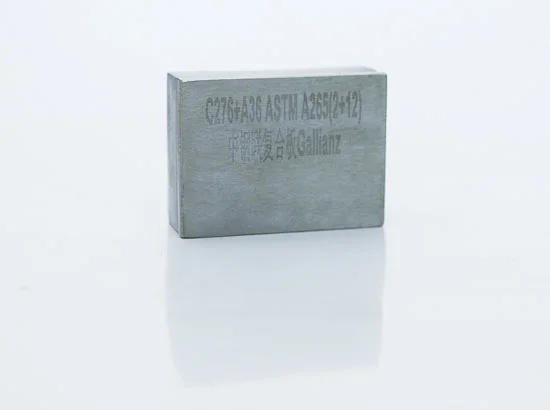
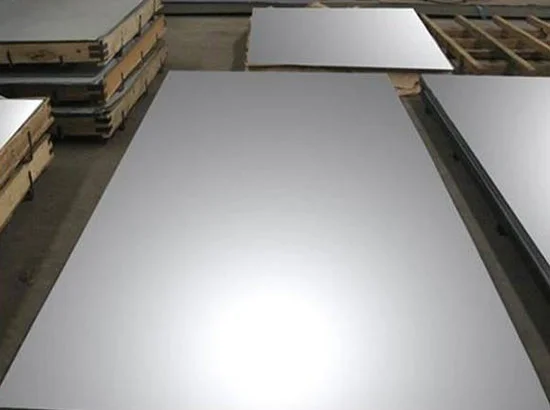
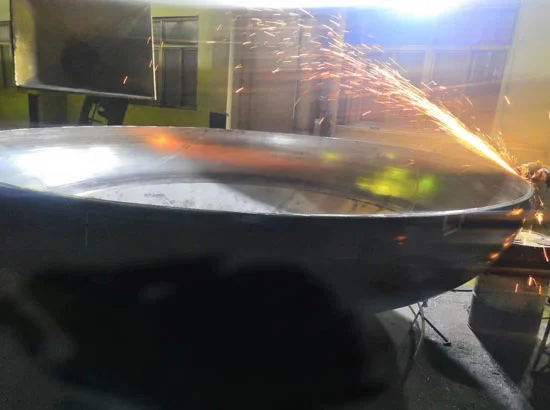
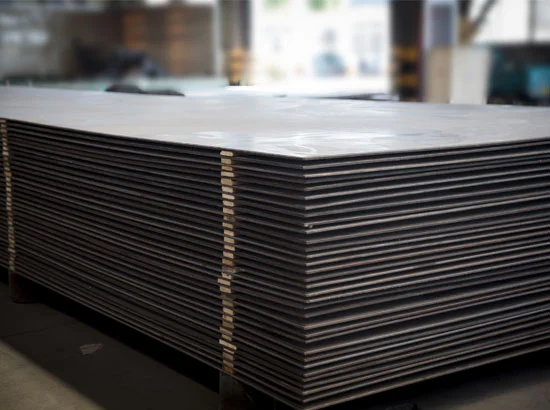
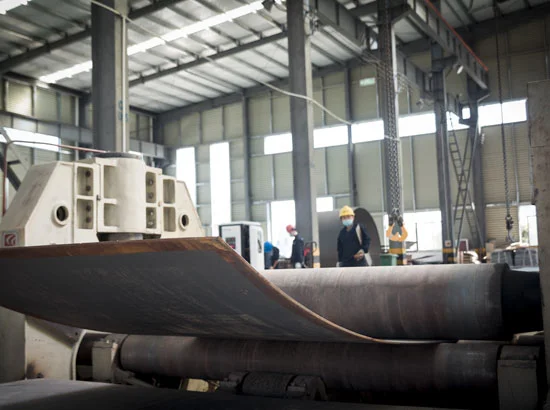
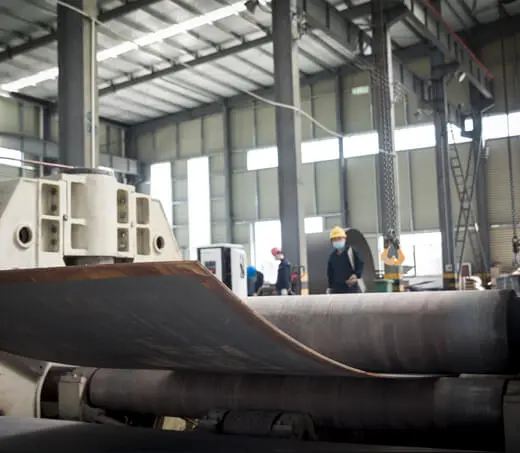
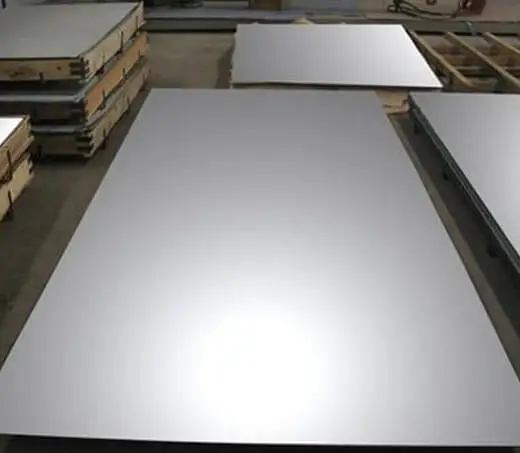
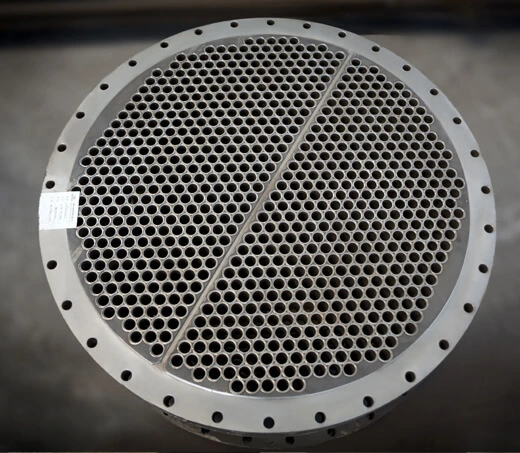
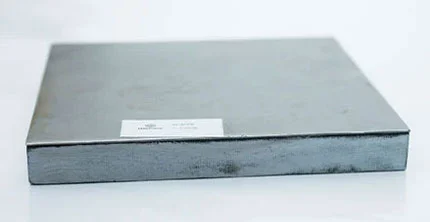
This clad plate is a typical "sandwich" structure, commonly referred to as SAS (Stainless-Aluminum-Stainless) or stainless steel–aluminum–stainless steel clad plate. Through advanced rolling and bonding technologies (such as hot rolling composite methods or explosive bonding), two layers of stainless steel are firmly bonded to an aluminum core, fully leveraging the advantages of each material.
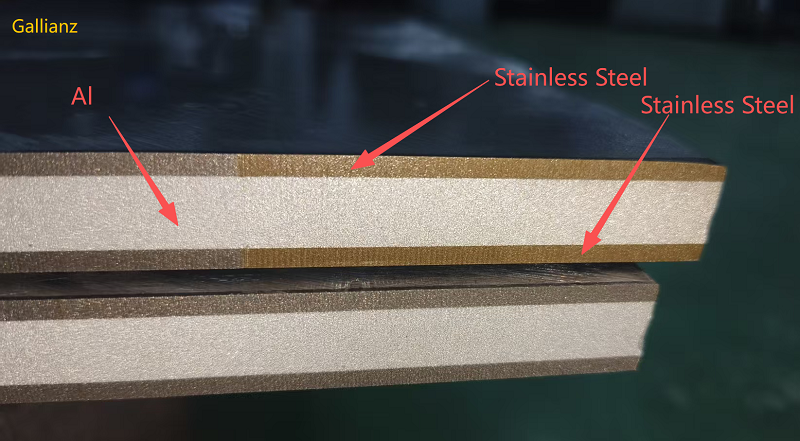
This structural design achieves a "1+1+1 > 3" synergistic effect. Its main performance advantages include:
1. Lightweight
Core Advantage: Aluminum has a density of approximately 2.7 g/cm³, much lower than stainless steel at about 7.9 g/cm³. By using aluminum as the core to replace a significant portion of stainless steel volume, the overall weight can be reduced by 30%–50% compared to a solid stainless steel plate. This is particularly valuable in applications where weight reduction is critical.
2. High Strength and Stiffness
Although the aluminum core is softer, the stainless steel layers provide excellent surface strength and yield strength. The "sandwich" structure itself offers high bending stiffness and resistance to deflection, allowing it to withstand greater loads without deformation compared to using pure aluminum or thinner stainless steel plates.
3. Excellent Corrosion Resistance
The stainless steel outer layers provide superior resistance to atmospheric corrosion, chemical media, acids, alkalis, and rust, protecting the aluminum core from corrosion. This structure effectively addresses aluminum's surface hardness limitations and susceptibility to pitting and crevice corrosion.
4. Good Thermal and Electrical Conductivity
Aluminum is an excellent conductor, and as the middle layer, it provides efficient thermal and electrical pathways. This results in higher heat exchange efficiency and improved electromagnetic interference (EMI) shielding performance compared to pure stainless steel plates.
5. Cost-Effectiveness
High-performance stainless steel, especially austenitic or duplex grades, is expensive. Using relatively inexpensive aluminum as the core maintains stainless steel surface performance while significantly reducing material costs.
6. Sound Damping and Vibration Reduction
Interfaces between different metal layers effectively dissipate sound waves and mechanical vibrations, offering superior acoustic and vibration damping compared to single-metal plates.
7. Processability
This composite combines stainless steel's wear resistance with aluminum's ease of fabrication. It can be cut, bent, stamped, riveted, and welded (with specialized techniques). Note that bending operations must consider the bonding strength at the composite interfaces.
Based on these performance advantages, SAS clad plates are widely used in areas where they are often irreplaceable:
1. Transportation – Lightweight Priority
Rail Transit: High-speed trains, subways, and light rail vehicles use SAS panels for car bodies, floors, sidewalls, roofs, luggage racks, etc., enabling weight reduction, lower energy consumption, and higher capacity.
Automotive Manufacturing: Applications include body panels for new-energy buses, battery tray protection plates, truck bodies, and more.
Shipbuilding: Used in superstructures and interior panels to reduce weight, enhancing stability and load capacity.
2. Architectural and Decorative Applications
Curtain Walls and Roofing: Combines stainless steel's luxurious appearance and durability with aluminum's lightweight and ease of installation. Reduces structural loads.
Interior Decoration: Elevator cabins, doors, ceilings, wall panels, and furniture surfaces. Offers high-end appearance, durability, and deformation resistance.
3. Electronics, Electrical Equipment, and EMI Shielding
Used in enclosures, cabinets, and shielding covers. Stainless steel provides structural strength and aesthetics, while the aluminum core enables effective electromagnetic interference (EMI) and radio-frequency interference (RFI) shielding.
4. Kitchenware and Home Appliances
High-End Cookware: Pans, oven interiors, dishwasher panels, etc. Stainless steel outer layers are easy to clean, corrosion-resistant, and visually appealing, while aluminum cores ensure fast, even heat distribution, improving energy efficiency.
Appliance Panels: For refrigerators, washing machines, and other appliances, offering a high-quality feel and strong durability.
5. Chemical and Industrial Applications
Used in lightweight, corrosion-resistant tanks, containers, and pipelines. Suitable for platforms and covers requiring a combination of strength and stiffness.
Outer Layer (Stainless Steel): Common grades include 304, 304L, 316L, 430, 443, 444, selected according to corrosion resistance requirements.
Core Layer (Aluminum): Common alloys include 3003, 5052, 6061, chosen based on strength, formability, and cost considerations.
The stainless steel–aluminum–stainless steel triple-layer clad plate is a high-performance functional-structural integrated material. By cleverly combining materials, it achieves an optimal balance of lightweight design, high strength, corrosion resistance, efficient heat/electric conduction, and cost control. It is not a cheap substitute but a purpose-designed solution to address specific engineering challenges, such as weight reduction, corrosion protection, and heat transfer. Its importance in modern industry, particularly in transportation and construction, continues to grow.
 English
 日本語
日本語 한국어
한국어 français
 Deutsch
 Español
 italiano
 русский
 português
 العربية
 فارسی
فارسی